When the Deposit Is a Loan: The Risk Math Behind a Card-Funded Trading Account
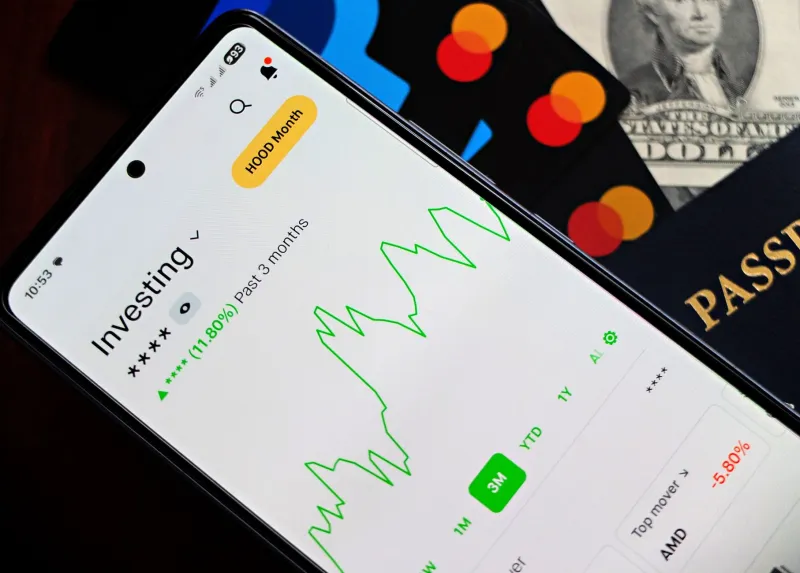
A few years back, a guy in a Discord I was lurking in posted a screenshot of a $2,000 brokerage deposit. Everyone congratulated him. Then someone asked where the money came from, and the chat went quiet. He said he had put it on a card. Not because he was reckless. Because he was impatient. He had been paper trading for six months, he was up 14% on the demo, and he did not want to wait another year to find out if he could do it with real money.
Names and details are changed here, but the pattern is not rare. A quiet share of US small-account traders fund brokerage deposits with credit cards, balance transfers, or buy-now-pay-later apps. Then they measure their results against a starting balance that was never really theirs. That is not just a budgeting problem. It is a risk problem that follows every trade.
The deposit that was not a deposit
A brokerage deposit feels like a starting line. You see $2,000 in the account, and your brain treats it as $2,000 of capital. But if that $2,000 came from a card with a 27.99% APR, your real position is different. You have $2,000 of buying power and $2,000 of debt, plus interest. Your net capital is negative from the first day.
That matters because trading decisions are supposed to be based on equity, not optics. If you risk 1% of a $2,000 account, you are risking $20 per trade. If your true net position is negative, that $20 is not 1% of your capital. It is a percentage of a number you invented. The account statement says one thing. Your balance sheet says another.
The interest math vs. the trading pitch
Run the numbers on a $2,000 card deposit at 27.99% APR. The annual interest, if you carried the full balance, would be about $559.80. In month one, the interest charge is roughly $46.65. If you pay $100 toward the card, only about $53 goes to principal. The rest pays for the privilege of starting early.
The trading pitch usually sounds like this: make 2% a month and you are fine. But 2% of $2,000 is $40. That is less than the first month’s interest. Before fees, platform costs, and taxes, you would need roughly 2.33% per month just to cover the interest on the deposit. That is not a trading goal. That is a hurdle.
And that is the clean version. Buy-now-pay-later apps can add late fees, deferred interest, or payment schedules that do not care whether your stop-loss held. A balance transfer may offer 0% for a while, but the clock runs whether you are profitable or not. The market does not extend a promotional rate.
Why a card-funded account warps every decision
A card-funded account changes the psychology of risk in at least three ways.
First, it raises the required return. You are not trading to grow capital. You are trading to outrun a fixed cost. That pushes some traders toward oversized positions because a normal return no longer feels like enough. The account is small, the interest is real, and the only way to make the math work is to take more risk. That is a terrible reason to size up.
Second, it changes what a drawdown means. If the account drops 10% to $1,800, the card balance is still $2,000, plus interest. Your net position is worse than a 10% loss. To get back to even on a net basis, the account has to earn more than 11% just to climb back to the deposit level. The hole is deeper than the screen shows.
Third, it makes every withdrawal a conflict. If you make $300 and take it out, do you pay the card or keep trading? If you pay the card, the account shrinks. If you keep trading, the debt grows. Either way, the decision is being made by the payment schedule, not the trading plan.
The awkward crew check-in
Trading crews are good at talking about entries. They are bad at talking about funding. That is a gap worth closing, because a group that shares setups but not balance-sheet reality is only sharing half the risk.
Here is a script that does not require anyone to confess details:
Before the next monthly challenge, the crew leader says: We are going to do one round of yes-or-no. Is every dollar in your trading account money you could lose without missing rent, a card payment, or a bill? No details. Just yes or no. If the answer is no, there is no shame. We adjust the plan. You can trade smaller, paper trade, or sit this one out. What we do not do is pretend the starting balance is real.
That last line matters. The goal is not to audit each other’s credit reports. The goal is to make sure the group is not comparing results across accounts with different definitions of capital. A $2,000 account funded with cash and a $2,000 account funded with a card are not the same experiment. Treating them as the same is how people end up copying position sizes that were never appropriate for them.
What to say before someone pledges
If you are the one being asked, keep it simple: I can trade this amount, but I cannot lose sleep over it. If the money is borrowed, I either need to size down or stay on paper until it is not. That is not a lack of ambition. It is a risk plan that includes the balance sheet.
And if you are the friend watching someone do it, skip the lecture. Ask one question: If this account went to zero tomorrow, would the payment still be there? If the answer is yes, the trade is not just a trade. It is a debt with a chart attached.
The cleaner path
The boring answer is usually the right one: trade small with money you own, build a record, and add capital from cash flow instead of credit. It is slower. It feels less like a movie montage. But it keeps the number on the screen connected to the number in your life. That connection is the whole point of risk management. Without it, you are not measuring your trading. You are measuring your ability to carry a balance.